

Outdoor project hai? Rust ka risk already high hai.
The Real Problem
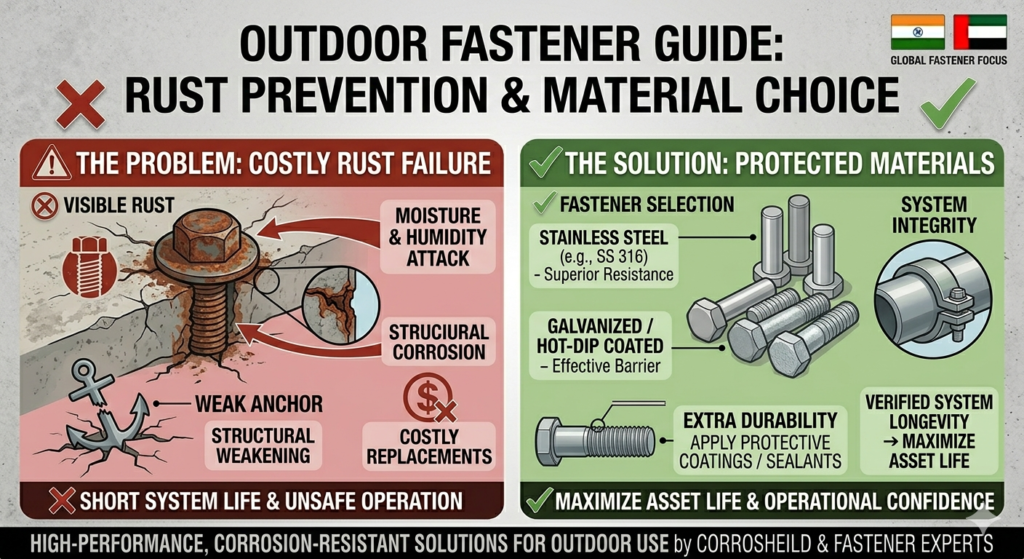
One of the most common and costly mistakes in outdoor construction and industrial projects is using standard indoor fasteners outside. Bolts, screws, nuts, and anchors that are not rated for outdoor use begin corroding within weeks — sometimes days — when exposed to moisture, rain, and humidity. Once rust sets in, the fastener loses its grip strength, becomes difficult to remove, and can cause the entire joint or structure to fail.
Rust is not just an appearance problem. It is a structural risk.
Why Outdoor Conditions Are Harsh on Fasteners
Fasteners used outdoors face constant attack from:
- Rain and standing water
- Morning dew and condensation
- UV exposure and temperature fluctuations
- Humidity in the air
- Saltwater exposure near coastal areas
- Industrial pollution and chemical fumes
All of these accelerate the oxidation process — and once corrosion begins, it spreads fast.
Delhi & Dubai Conditions — Why Extra Care Is Needed
Both Delhi and Dubai present unique corrosion challenges:
Delhi — High humidity during monsoon season, industrial air pollution, and dust-laden environments create ideal conditions for fastener corrosion. Outdoor structures, rooftop installations, and pipeline supports in Delhi are especially vulnerable during July to September.
Dubai — Coastal saltwater air, extreme summer heat (up to 50°C), and high humidity make Dubai one of the most corrosion-aggressive environments in the world. Standard fasteners deteriorate rapidly here. Marine-grade or A4 stainless steel fasteners are strongly recommended for all outdoor and coastal applications in the UAE.
Key Methods to Protect Fasteners from Rust
1. Choose the Right Fastener Material
- Stainless Steel (SS 304 / SS 316) — Best for outdoor and coastal environments. SS 316 is marine grade and offers the highest corrosion resistance
- Galvanized Fasteners — Zinc-coated steel that provides good protection for general outdoor use
- Hot-Dip Galvanized (HDG) — Thicker zinc coating for heavy-duty outdoor and industrial applications
- Zinc-Plated Fasteners — Basic protection for mild outdoor exposure; not suitable for high humidity or coastal areas
2. Apply Protective Coatings
- Anti-corrosion spray or rust inhibitor applied after installation
- Thread sealant or thread-locking compounds that also seal out moisture
- Epoxy or zinc-rich paint on bolt heads and exposed threads
3. Use Nylon or Rubber Washers Isolating metal fasteners from direct contact with dissimilar metals or wet surfaces reduces galvanic corrosion significantly.
4. Avoid Mixing Metals Using a steel bolt with an aluminium fitting creates galvanic corrosion. Always match compatible metals or use isolation materials between them.
5. Regular Maintenance and Inspection Even the best fasteners need periodic inspection in outdoor environments. Check for early signs of rust, tighten any loosened joints, and reapply protective coatings as needed.
The Most Common Mistake
Using fasteners designed for indoor or dry environments in outdoor applications. This includes standard zinc-plated or uncoated mild steel fasteners in rooftop, pipeline, structural, or open-air installations. The cost difference between a standard fastener and a stainless steel or galvanized one is small — but the cost of failure, replacement, and structural damage is very high.
Fastener Selection Checklist for Outdoor Projects
Before finalizing any fastener for outdoor use, verify:
- Material — SS, galvanized, HDG, or coated?
- Environment — coastal, industrial, high humidity, or extreme heat?
- Load requirement — structural, lightweight, or vibration-prone joint?
- Compatibility — are you mixing metals?
- Coating — additional protection needed after installation?
- Maintenance plan — how often will the joint be inspected?
Expert Advice
The right fastener for an outdoor project depends on your specific location, environment, and load conditions. Do not compromise on fastener quality for outdoor applications — the risk is never worth the saving.
Call us before finalizing fasteners for your outdoor project — we help you choose the correct material, coating, and grade for your exact environment and requirement.