
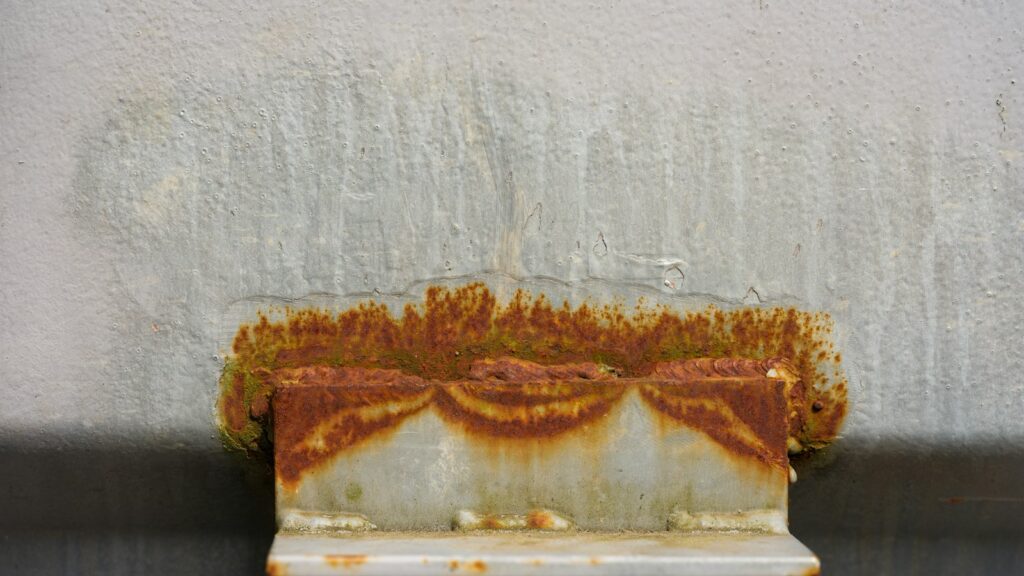
Fasteners fail from corrosion because rust slowly eats the steel until the remaining section can no longer carry the load. It usually happens out of sight, inside a joint or hole, so the failure looks sudden when it comes. The fix is to choose the right material and coating for the exposure from day one.

How corrosion causes failure
- Loss of section: rust reduces the steel area that carries the load
- Thread damage: nuts loosen and clamping force drops
- Hidden attack: water trapped in holes and under washers corrodes where no one looks
- Cracking: rusting steel expands and can crack concrete or stone around it
The main causes
Wrong material for the exposure
Indoor-grade zinc-plated fasteners used outdoors or near the sea.
Galvanic corrosion
Two different metals in contact, such as stainless and plain steel, with moisture between them.
Damaged coatings
Coatings scratched during installation, or cut ends left unprotected.
Chlorides and chemicals
Salt air on the coast, pool areas, and industrial plants speed up corrosion.
How to prevent it
- Assess the exposure: indoor, outdoor, coastal or chemical.
- Choose the material: zinc-plated, hot-dip galvanised or stainless A4 / 316.
- Use coated screws such as Corroshield for roofing and cladding.
- Keep the joint in one compatible metal.
- Seal holes, and inspect outdoor fixings regularly.
Prevention costs far less than replacing a failed façade or roof fixing. More: how to protect fasteners from rust outdoors, why corrosion protection matters on every site and which threaded rod to use with chemical anchors.
Get corrosion-resistant fasteners
Fasteners King has supplied anchors and fixings since 1979. We are India’s No. 1 Fischer channel partner (5 years in a row) and an Authorised Hilti Channel Partner, with stock in Delhi, Guwahati and Dubai. See our Corroshield fasteners or WhatsApp your exposure conditions.