

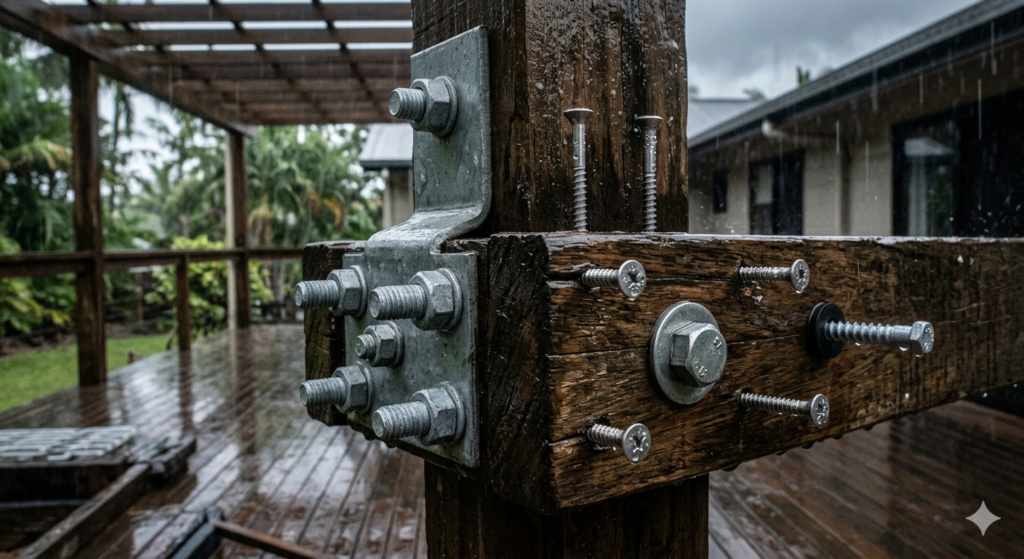
Weather-resistant fasteners help improve structural durability and corrosion resistance during monsoon seasons with high humidity and heavy rainfall conditions.
The heavy rainfall and extreme humidity experienced during monsoon seasons create significant challenges for construction projects and structural installations. During these conditions, fasteners play a critical role in maintaining the strength, stability, and durability of structural components.
Selecting weather-resistant fasteners is important for improving long-term performance in demanding environmental conditions. These fasteners are designed to provide better resistance against moisture, corrosion, and environmental exposure that commonly affect structures during monsoon seasons.
Using the right weather-resistant fastening solutions can help reduce the risk of structural weakening, corrosion-related damage, and performance issues in commercial, industrial, and construction applications.
Reliable fasteners not only support structural integrity but also contribute to safer and longer-lasting installations in regions exposed to heavy rain and high humidity conditions.
Understanding Monsoon Threats to Fasteners
Monsoon conditions attack fasteners through multiple degradation pathways:
Accelerated Corrosion: The combination of persistent moisture and increased atmospheric pollutants dramatically accelerates electrochemical corrosion processes, particularly in urban environments.
Expansion-Contraction Cycles: Daily temperature fluctuations combined with moisture saturation create continuous expansion and contraction that can loosen mechanical fasteners over time.
Biological Growth: High humidity promotes fungal and microbial growth that can produce corrosive metabolic byproducts, particularly damaging to certain metal alloys.
Water Infiltration: Hydrostatic pressure during heavy downpours forces water into microscopic spaces around fasteners, creating long-term moisture exposure even after visible surfaces have dried.
Essential Attributes for Monsoon-Ready Fasteners
When selecting fasteners for monsoon-prone regions, prioritize these critical characteristics:
Corrosion Resistance: The primary defense against monsoon conditions comes from inherent material resistance to oxidation and electrochemical degradation.
Galvanic Compatibility: Careful matching of fastener materials with connected elements prevents accelerated bimetallic corrosion cells that rapidly destroy connections.
Proper Sealing Systems: High-performance washers, gaskets, and sealants prevent water infiltration at the fastening interface.
Installation Methodology: Even the best fasteners fail prematurely without proper installation techniques that account for thermal movement and moisture management.
Superior Material Choices for Monsoon Applications
Several material options stand out for their exceptional performance in monsoon conditions:
Hot-Dip Galvanized Steel: This traditional approach creates a zinc coating that sacrificially protects the underlying steel. Modern hot-dip processes achieve coating thicknesses of 45-100 microns, providing decades of protection in monsoon environments.
304/316 Stainless Steel: While more expensive, stainless fasteners offer unmatched performance. The 316 grade, with its molybdenum content, provides superior resistance to chloride exposure in coastal monsoon regions.
Silicon Bronze: For applications where non-ferrous fasteners are required, particularly with certain woods, silicon bronze offers excellent corrosion resistance combined with high strength.
Composite Fasteners: Fiberglass-reinforced nylon and other engineered composite fasteners eliminate corrosion concerns entirely while providing adequate strength for non-structural applications.
Installation Best Practices for Monsoon Resilience
Material selection alone isn’t sufficient—installation techniques significantly impact monsoon performance:
Anti-Seize Compounds: Apply appropriate anti-seize compounds to threaded connections to prevent corrosion-induced seizure during future maintenance.
Elastomeric Washers: Use properly sized EPDM or silicone washers to create compression seals that prevent water infiltration around fastener penetrations.
Proper Torque Application: Follow manufacturer torque specifications precisely—over-tightening damages protective coatings while under-tightening allows water infiltration.
Post-Installation Protection: Apply protective coatings over fastener heads in exposed applications to provide an additional barrier against direct moisture contact.
Maintenance Strategies During Monsoon Periods
Even with optimal fastener selection, regular maintenance remains essential:
Scheduled Inspections: Implement comprehensive fastener inspection routines before and during monsoon seasons.
Early Intervention: Address initial signs of corrosion immediately before they compromise structural integrity.
Protective Reapplication: Reapply protective coatings to exposed fasteners as part of routine maintenance schedules.
The relentless challenge of monsoon conditions demands thoughtful fastener selection that balances initial cost against the potentially catastrophic expenses of premature failure. By prioritizing appropriate materials, installation techniques, and maintenance schedules, construction professionals can ensure their fastening systems stand firm against the monsoon’s fury, providing decades of reliable service even in nature’s most challenging seasons.