
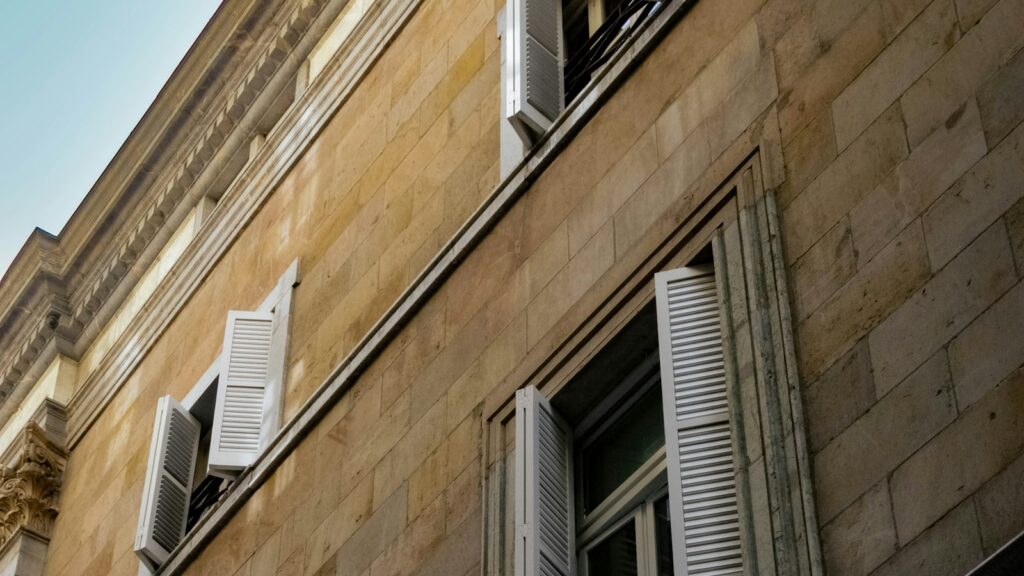
Stone cladding fails on buildings for a few repeat reasons: corroded or undersized clamps, weak anchors into the wall, too little engagement in the stone, and relying on adhesive or mortar dabs alone at height. Most failures are avoidable at the design and buying stage.

The main causes of cladding failure
1. Rusting clamps
Mild steel or poorly coated clamps rust inside the joint, stain the stone and lose strength. Read why cheap cladding clamps cost more later.
2. Clamps too small for the stone
Heavy granite or marble panels need clamps sized for their weight and thickness.
3. Weak anchors into the wall
Clamps are only as strong as the anchor behind them. Concrete, brick and block each need the right anchor. Hollow block needs a chemical anchor with a mesh sleeve.
4. Too little engagement
The clamp pin or lip must sit properly in the kerf or slot of the stone.
5. Adhesive only at height
Fixing heavy stone with adhesive or mortar dabs alone, without mechanical clamps, is a known cause of panels falling.

How to prevent it
- Use stainless clamps: SS-304 inland, SS-316 near the coast
- Size clamps to the stone weight and thickness
- Choose the anchor to suit the wall material, and install it correctly
- Check kerf depth and clamp engagement on site
- Always use mechanical fixing for external stone at height
For clamp types, see the types of stone cladding clamps. For anchors into the wall, read chemical vs mechanical anchors.
Get cladding clamps and anchors together
Fasteners King has supplied anchors and fixings since 1979. We are India’s No. 1 Fischer channel partner (5 years in a row) and an Authorised Hilti Channel Partner, with stock in Delhi, Guwahati and Dubai. See our stone cladding clamps or WhatsApp your stone type, size and wall material.