
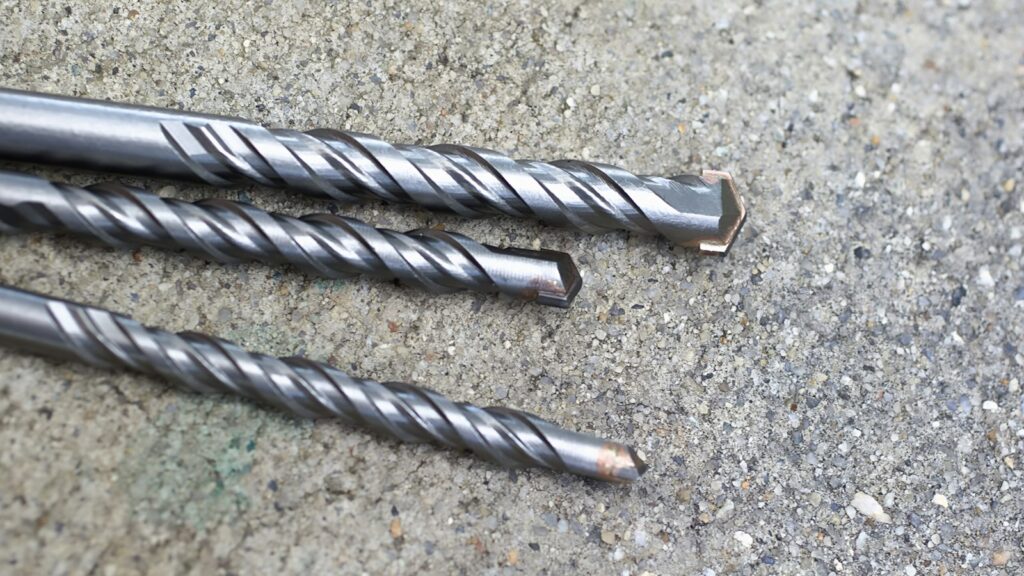
Drilling accuracy decides how strong an anchor will be. A hole that is too wide, too shallow, off-angle or dusty can cut holding power sharply, even with a premium Hilti or Fischer anchor. Getting the hole right is the cheapest way to get the rated load.

Common drilling errors on site
Oversize hole
Worn bits, wobbling drills or rotary mode in the wrong material make the hole too wide. Mechanical anchors can’t expand enough to grip, and chemical anchors get a thick, weak resin layer.
Off-angle hole
An anchor that isn’t straight takes bending as well as load, and the fixture doesn’t sit flat.
Wrong depth
Too shallow means less embedment and less holding power. Too deep wastes mortar in chemical anchors.
Dust left in the hole
The most common error with chemical anchors. Blow, brush and blow again.
Drilling into rebar
Hitting rebar and carrying on damages the bar. Stop, move the hole as the engineer allows, and fill the abandoned hole.

How to drill an accurate hole
- Use the bit diameter given in the anchor’s data sheet
- Replace worn carbide bits
- Use hammer mode in concrete; rotary only in hollow materials where advised
- Mark the depth on the bit or use a depth stop
- Keep the drill square to the surface
- Clean the hole before installing
Good tools help: read why good drilling tools matter for anchor strength. For full installation steps, see our Hilti chemical anchor installation guide and the common Fischer anchor mistakes on site.
Choose the right anchor for the hole
Fasteners King has supplied anchors and fixings since 1979. We are India’s No. 1 Fischer channel partner (5 years in a row) and an Authorised Hilti Channel Partner, with stock in Delhi, Guwahati and Dubai. See our Fischer chemical anchors and ask for the data sheet with your order.